Ryan Ussher
Ryan Ussher is an incredibly skilled tattoo artist based in Sydney, Australia, specialising in Japanese style tattooing. Being the artist and owner at Lighthouse Tattoo, Ryan boasts a significantly strong online presence with approximately 150,000 followers on Instagram admiring his intricate work. His high craftsmanship is reflected in every tattoo he creates, making him a highly sought-after artist in his field.
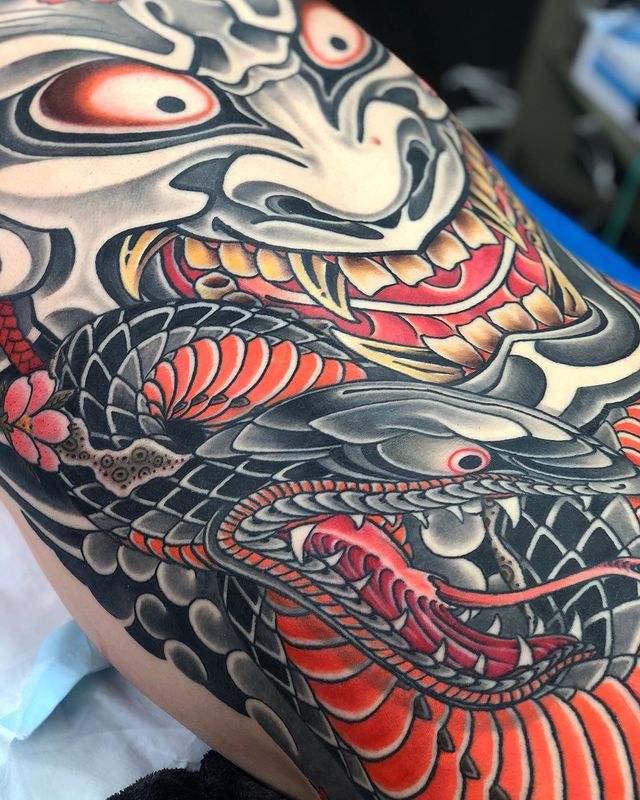
Ryan Ussher is a Japanese tattoo artist based in Sydney, New South Wales, Australia. He specializes in traditional Japanese tattooing, creating bold, large-scale compositions rooted in classic irezumi aesthetics. With over 148,000 Instagram followers, Ussher has built a strong reputation for his Japanese work, including koi, dragons, peonies, and other iconic motifs from the tradition. His style emphasizes bold outlines, saturated color, and flowing compositions designed to follow the body's natural contours. Contact Ryan directly through his website or Instagram for booking inquiries.
History & Origins
Japanese tattooing, or irezumi, carries centuries of history rooted in Edo-period Japan. What started as punishment marks evolved into an intricate art form tied to folklore, spirituality, and identity. Traditional Japanese tattoos were hand-poked using tebori, a method some artists still practice today alongside modern machines. Ryan Ussher works within this lineage, drawing from the visual language that woodblock print masters like Kuniyoshi and Hokusai established. The bold outlines, restricted color palette, and narrative compositions that define classic ukiyo-e prints remain the backbone of the style. Understanding this history matters because Japanese tattooing is not just a visual aesthetic. The motifs carry specific meanings. A koi swimming upstream represents perseverance. A dragon symbolizes wisdom and protection. Wearing these symbols without understanding them strips the work of its depth. Ussher's practice sits at the intersection of honoring that tradition and creating pieces that resonate with contemporary clients in Sydney.
Defining Characteristics
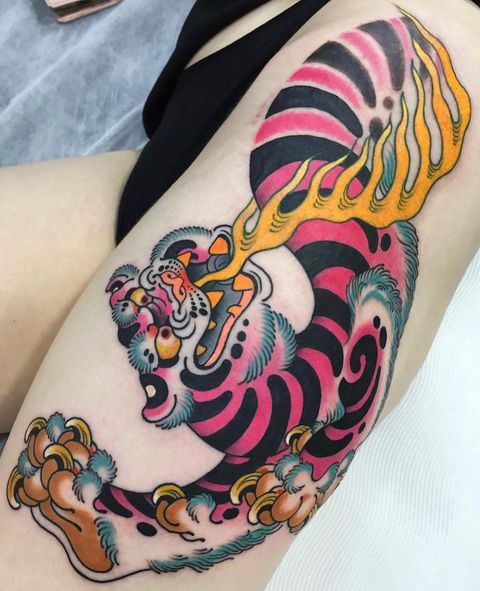
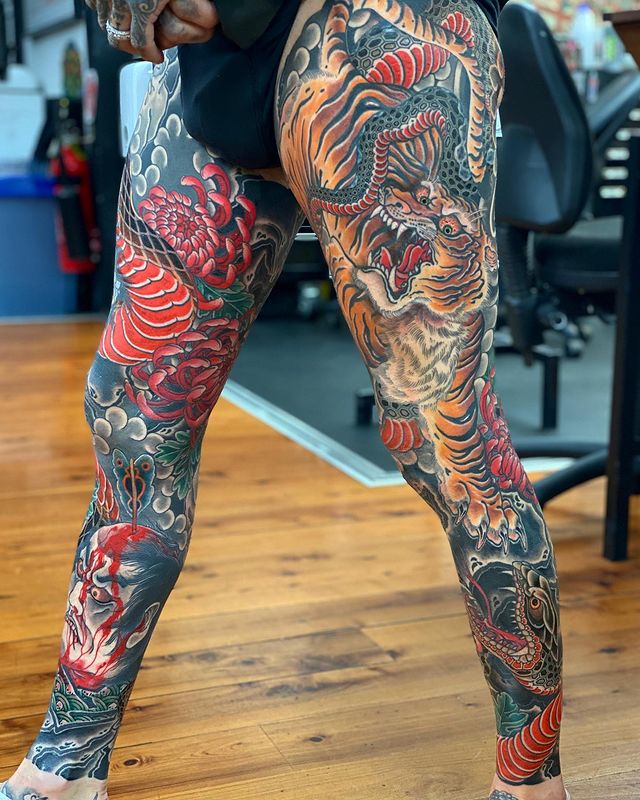
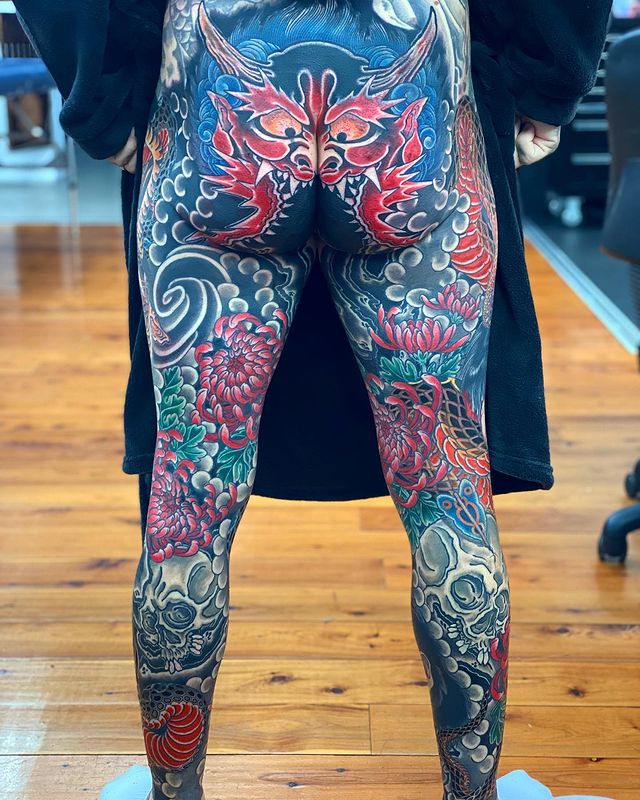
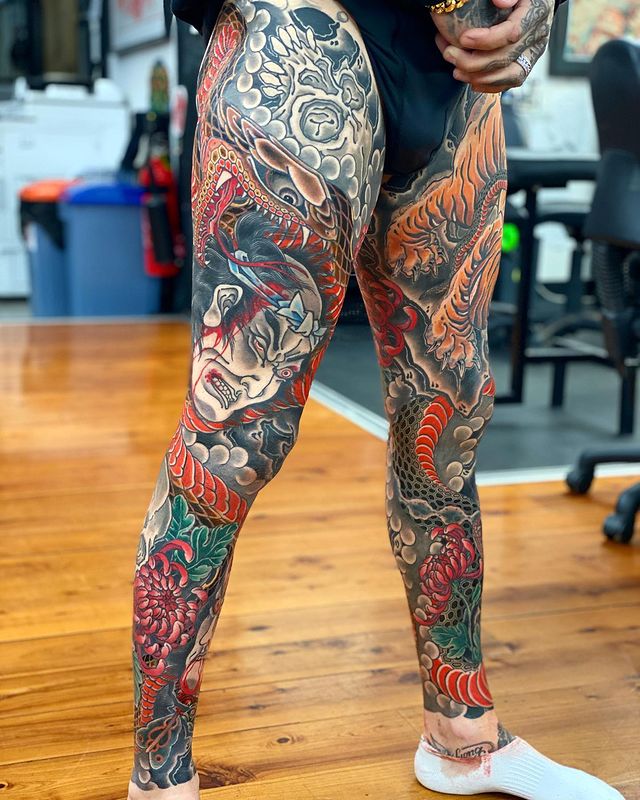
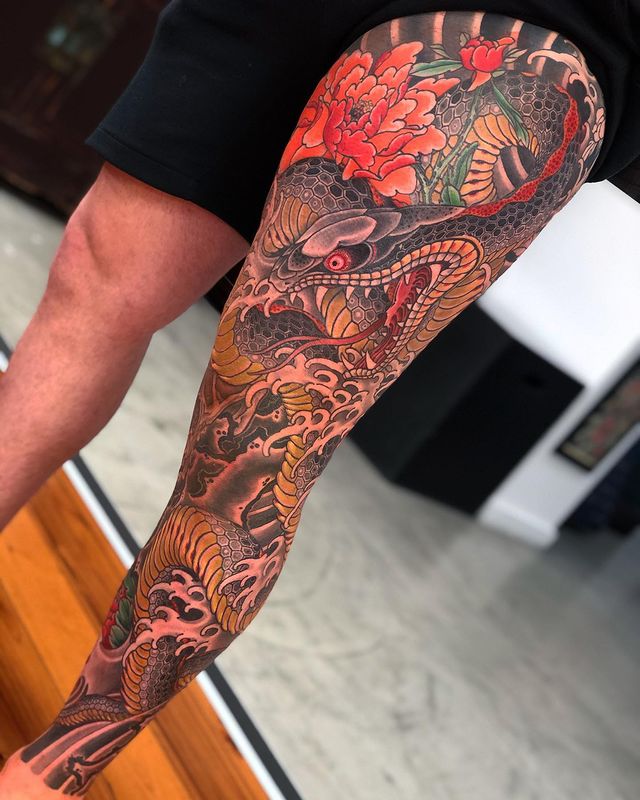
Ryan Ussher's work sits firmly in the traditional Japanese camp. That means thick, confident outlines that hold up over decades. Saturated colors, especially the classic reds, yellows, and blues that define irezumi. Background elements like wind bars and wave patterns that give the piece movement and structure. What separates a solid Japanese tattoo from a mediocre one is flow. The design has to wrap the body, not just sit on it like a sticker. A well-executed Japanese piece uses the shoulder, ribs, or thigh as part of the composition. The background fills negative space intentionally. Ussher's portfolio shows this kind of body-aware design. His compositions fill large areas with interconnected elements rather than isolated floating images. The wind bars and cloud work in his pieces create rhythm and direction, guiding the eye across the entire tattoo. This approach requires serious planning and a deep understanding of how skin ages, moves, and heals. That is why experienced Japanese artists often prefer larger canvases. The style simply does not work well when compressed into tiny spaces.
Popular Motifs & Subjects
Japanese tattooing runs on a shared visual vocabulary, and Ussher works with its core symbols. Koi fish appear frequently in his portfolio, representing perseverance and strength, especially when depicted swimming upstream. Dragons show wisdom and protection, often rendered wrapping around limbs or across backs. Botanical elements like peonies, cherry blossoms, and chrysanthemums fill backgrounds and frame the central figures. Each flower carries its own meaning. Peonies symbolize wealth and good fortune. Cherry blossoms remind the wearer of life's impermanence. Other recurring subjects include tigers, snakes, foo dogs, and mythological figures from Japanese folklore. The key to a strong Japanese piece is how these elements interact. A dragon paired with clouds reads differently than a dragon surrounded by fire. A koi with maple leaves signals autumn. These pairings are not random. They follow established conventions that Japanese tattoo collectors and artists understand deeply. If you are considering a Japanese piece by Ussher, think about which stories or qualities you want to carry, not just which images look cool on screen.
Placement & Sizing
Japanese tattooing and small placements do not mix well. The style relies on scale, negative space, and flowing compositions that need room to breathe. Full sleeves, back pieces, and chest panels are the natural home for this work. Ussher's Instagram shows large-scale projects that take full advantage of the body's contours. A half sleeve might work for a single motif like a koi or tiger, but the background elements that make Japanese tattooing feel complete need space. Wind bars, clouds, and water patterns require room to create the movement that defines the style. If you are thinking about a Japanese piece, consider starting with a larger area. The thigh, full arm, or back gives the artist room to build a composition that flows naturally. Smaller pieces can work as starting points for larger work later, but discuss that plan with Ussher first. A good Japanese tattooer thinks about how each piece connects to future work. Going in with a clear long-term vision produces better results than adding random elements over time. Check the tattoo pain chart if you are concerned about sensitivity in areas like the ribs or inner arm.
Choosing an Artist
Picking the right artist for a Japanese tattoo matters more than most styles. The tradition has specific rules around composition, color use, and motif pairing. An artist who understands these conventions will produce work that reads correctly to anyone familiar with the style. Ryan Ussher has built a following of over 148,000 on Instagram, which speaks to the demand for his Japanese work. When evaluating any artist for this style, look at their healed work, not just fresh photos. Bold lines should stay crisp. Colors should remain saturated. Background elements should still read clearly months later. Ask to see healed photos if they are not posted. Consider the commitment too. Large-scale Japanese work requires multiple sessions spread over weeks or months. You need an artist whose communication style works for you and whose vision aligns with yours. Reach out to Ussher through his website or Instagram with a clear idea of what you want. Reference images help. So does being open to the artist's suggestions on how to make the piece work on your body. Browse Japanese tattoo ideas to start narrowing down your concept before reaching out.
Explore more
Frequently Asked Questions
How do I book a tattoo with Ryan Ussher?
You can reach Ryan Ussher through his website at usshertattoos.com or via his Instagram @ryanussher. Contact the artist directly to discuss your idea, sizing, and availability.
What style of tattoos does Ryan Ussher specialize in?
Ryan Ussher specializes in Japanese tattooing. His work draws from traditional irezumi, featuring bold outlines, saturated color palettes, and classic motifs like koi fish, dragons, and botanical elements.
Where is Ryan Ussher based?
Ryan Ussher is based in Sydney, New South Wales, Australia. Contact him directly to confirm his current studio location.
How much does a tattoo by Ryan Ussher cost?
Pricing details are not publicly listed. Contact Ryan Ussher directly through his website or Instagram to discuss pricing based on your design, size, and placement.
Does Ryan Ussher accept walk-ins?
Walk-in availability is not confirmed. Ryan Ussher likely works by appointment given the demand for his work. Reach out through his website or Instagram to book a session.