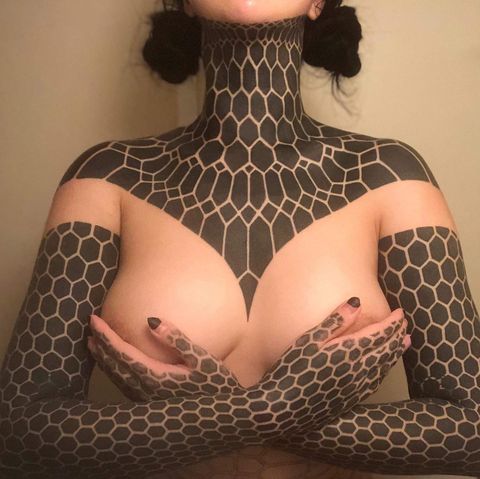
Taku Oshima
Taku Oshima is a tattoo artist with a noteworthy level of skill, as exemplified by his proficiency in tribal and geometric tattoo styles. Based in The Hague, Netherlands, his unique approach has earned him a broad following, capturing the attention of over 140,000 fans on Instagram globally. His style reflects a distinct blending of professional techniques and artistic creativity that sets him apart in the tattoo world.
Taku Oshima is a tattoo artist based in The Hague, Netherlands, specializing in tribal and geometric tattoo styles. With over 142,000 followers on Instagram, his work has earned significant recognition across the international tattoo community. His designs merge bold tribal patterns with precise geometric compositions, creating pieces that carry cultural depth and modern structure. Based in South Holland, Taku works independently and takes on projects that align with his signature aesthetic. Prospective clients can reach him through his website at apocaript.com or via Instagram @taku_oshima_tattoo. For booking details, pricing, and availability, contact the artist directly.
History & Origins
Tribal tattooing carries thousands of years of cultural significance across Polynesian, Māori, Filipino, and other indigenous traditions. These patterns were never decorative alone. They marked lineage, status, rites of passage, and spiritual protection. Geometric tattooing, while sharing ancient roots in sacred geometry and mandala traditions, has evolved into a distinct modern discipline that emphasizes mathematical precision and visual rhythm. Taku Oshima's work sits at the intersection of these two traditions. His tribal pieces draw from the bold, black-ink lineage of Polynesian and indigenous patterning, while his geometric work leans into clean lines, symmetry, and structured repetition. The combination is not accidental. Both styles demand a deep understanding of flow, negative space, and how patterns move across the body's contours. What sets artists like Taku apart is the ability to honor the weight of tribal traditions while pushing geometric forms into new territory. For anyone considering this style, understanding these origins matters. Tribal tattooing is not a trend. It carries cultural meaning that deserves respect and proper context.
Defining Characteristics
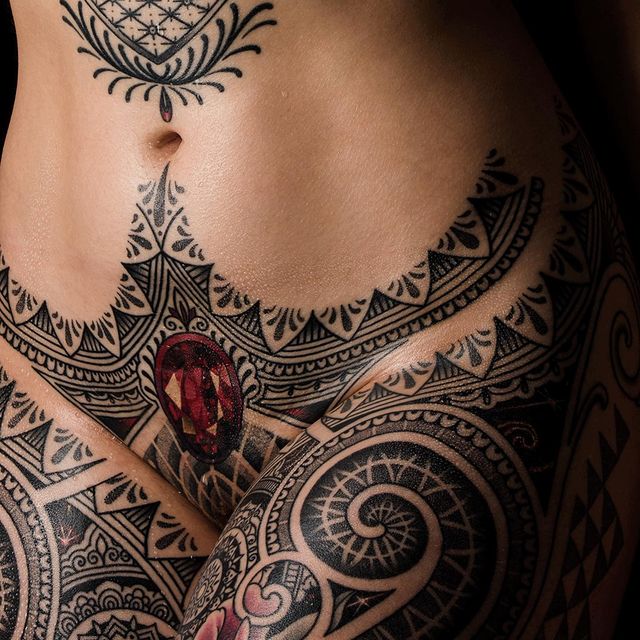
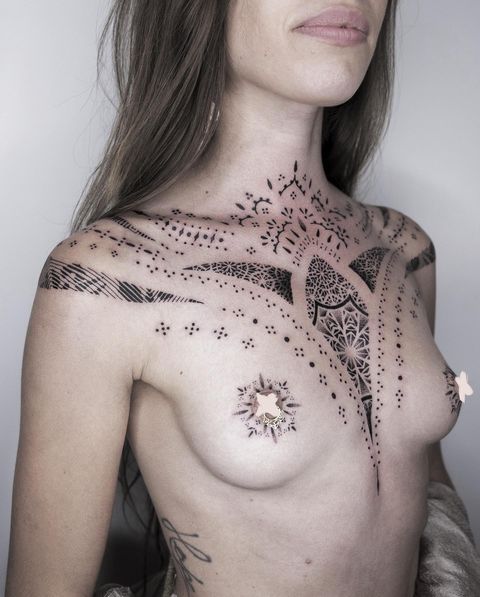
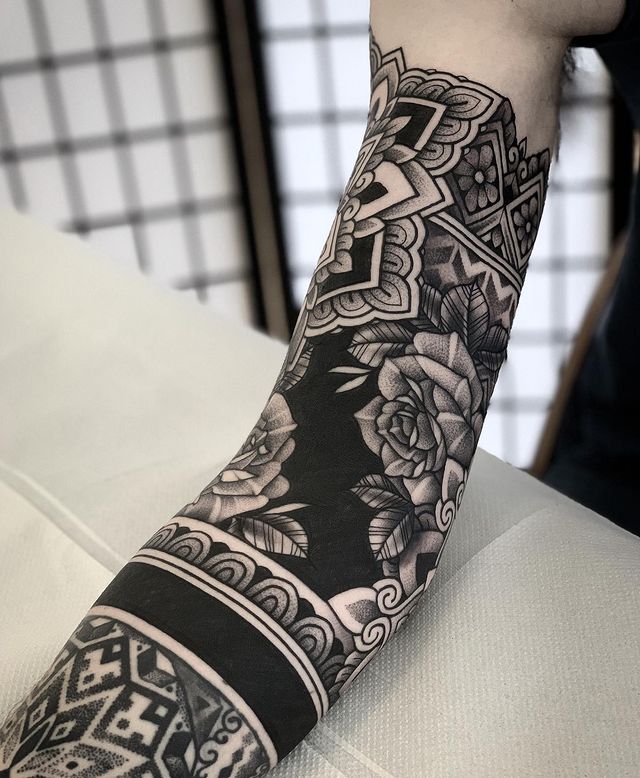
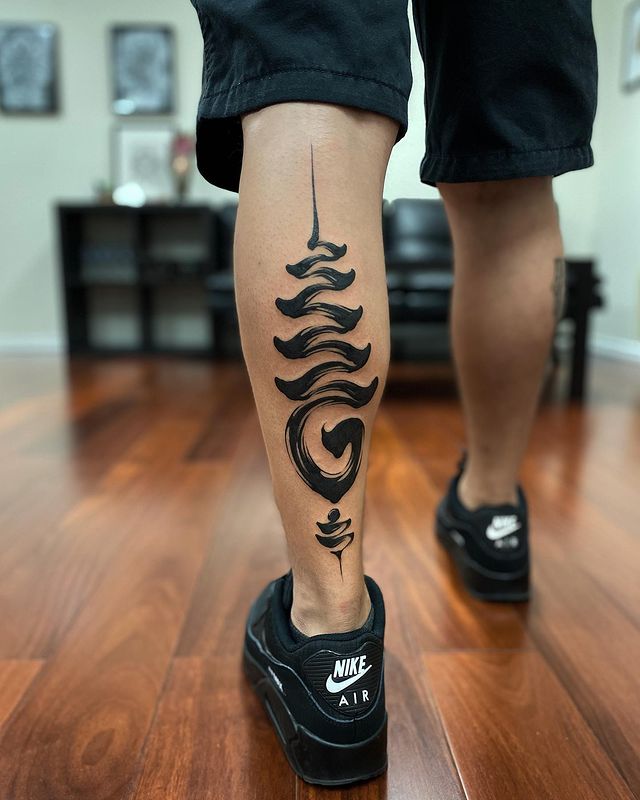
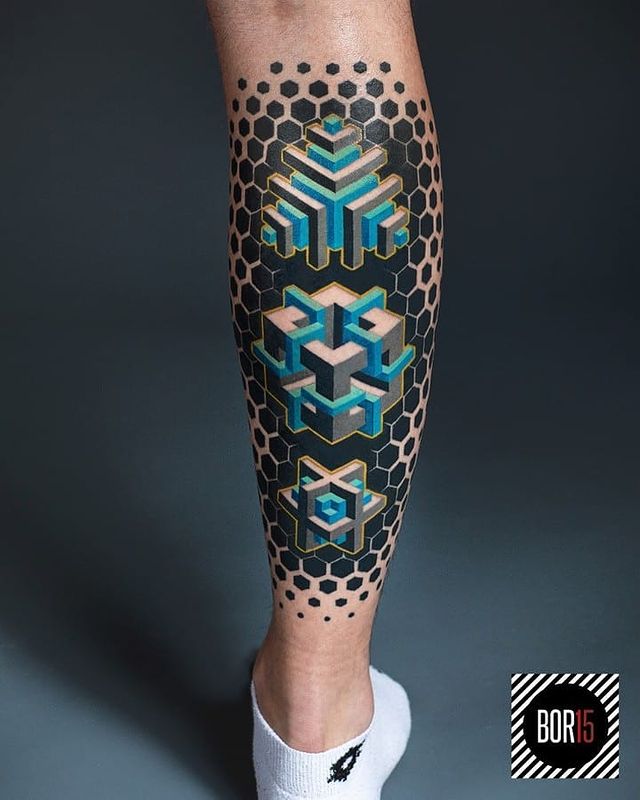
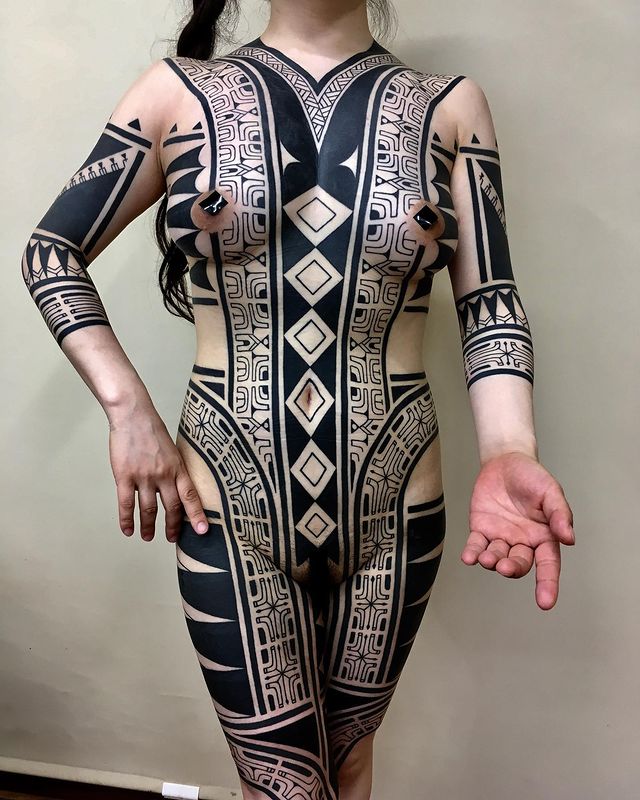
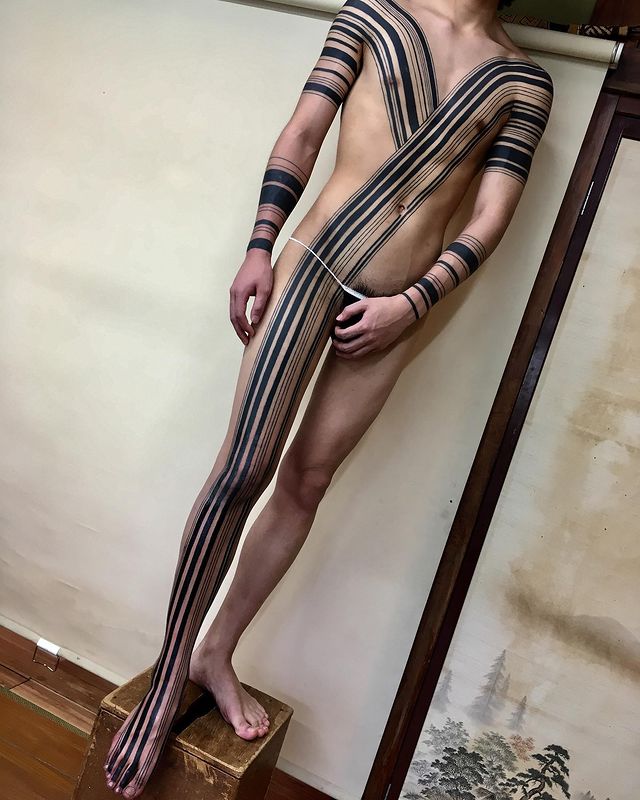
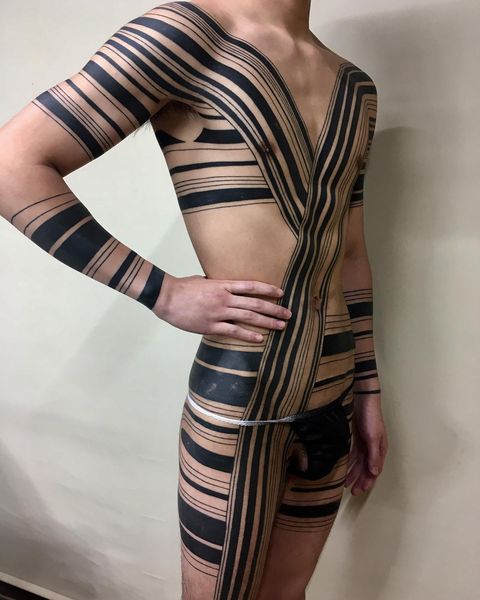
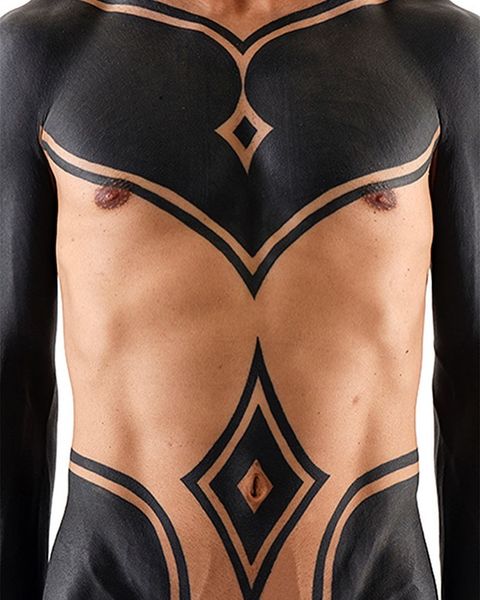
Taku Oshima's tattoo work is defined by two core elements: bold black ink and precise pattern structure. His tribal designs feature thick, confident linework with clean edges and consistent saturation. There is no shading gradient or color wash here. The impact comes from contrast, pure black against skin, with negative space doing as much visual work as the ink itself. His geometric pieces follow a different logic. They rely on exact symmetry, repeating shapes, and mathematical proportion. Circles, triangles, and parallel lines intersect at calculated angles, creating compositions that feel architectural rather than painted. What makes Taku's approach notable is how these two languages merge. A tribal sleeve might anchor its foundation in traditional Polynesian patterning, then introduce geometric gridwork that gives the piece a contemporary edge. The result reads as both ancient and modern. Consistency matters in this style. Tribal and geometric tattoos leave no room for wobbly lines or uneven saturation. Every mark is visible. Every edge is judged. Artists working in this space need steady hands and an eye for how patterns will age over decades, not just months.
Popular Motifs & Subjects
In tribal tattooing, certain motifs appear repeatedly because they carry specific cultural meanings. Shark teeth patterns (niho mano) represent strength and protection. Ocean waves symbolize life's rhythm and connection to water. Turtle shells reference longevity and navigation. Spearheads signal courage and dominance. Taku Oshima incorporates these traditional elements while filtering them through a geometric lens. You will see tribal bands that break into geometric fractals. Shoulder pieces where Polynesian spearhead patterns transition into precise chevron stacks. Chest designs that layer traditional motifs over geometric gridwork. The geometric side of his portfolio features mandalas, sacred geometry patterns, nested shapes, and tessellated designs that draw from both Eastern spiritual traditions and modern minimalist aesthetics. Some pieces lean almost entirely geometric, with fine intersecting lines creating depth through optical illusion. Others are predominantly tribal, with geometric accents that sharpen the overall composition. For clients considering a piece with Taku, the motif conversation starts with meaning. What story are you telling? What symbols resonate? The best tribal and geometric tattoos are not chosen from a flash wall. They are built from personal significance, shaped by cultural awareness, and executed with technical precision.
Placement & Sizing
Tribal and geometric tattoos interact with the body differently than illustrative or realistic styles. They do not sit passively on the skin. They wrap, follow, and accentuate the body's natural architecture. This makes placement a critical decision. Full sleeves and half sleeves are common choices for tribal work because the repeating patterns flow naturally along the arm's cylindrical shape. The shoulder and upper arm provide a broad canvas where bold patterns can establish rhythm before continuing down the forearm. Chest pieces work well for symmetrical tribal and geometric designs, with the sternum serving as a natural centerline. Back pieces offer the largest uninterrupted surface, allowing complex compositions to breathe. For geometric work specifically, placement affects how the design reads. A mandala on the sternum centers the composition naturally. Geometric patterns along the ribs follow the body's curves, creating movement even in static shapes. Size matters in these styles. Tribal patterns need sufficient scale for the individual elements to remain readable as the tattoo ages. Fine geometric linework requires careful consideration of how thin lines will hold up over time. Discuss placement and sizing thoroughly during your consultation.
Choosing an Artist for Tribal & Geometric Work
Selecting the right artist for tribal or geometric tattoo work requires looking beyond portfolio photos. These styles demand specific technical skills that not every tattooer possesses. First, examine line quality. Tribal tattoos need consistent saturation and clean edges. Geometric pieces require perfectly straight lines and exact symmetry. Any wobble or inconsistency becomes immediately visible in these styles. Second, consider cultural competency. Tribal tattooing draws from living traditions with deep cultural significance. If you want Polynesian-inspired work, seek an artist who understands the meanings behind the patterns, not just the visual aesthetic. Taku Oshima's focus on tribal and geometric styles means his portfolio demonstrates sustained commitment to these disciplines rather than occasional forays. His following of over 142,000 on Instagram suggests his work resonates with a broad audience, but follower count is one metric among many. Look at healed photos, not just fresh pieces. Check whether geometric lines stay crisp after months of healing. See how tribal blackwork holds its saturation over time. When you reach out to book, be specific about what you want. Reference images help. A clear description of placement and size saves everyone time. Contact the artist directly through his website or Instagram to discuss your project.
Explore more
Frequently Asked Questions
What style of tattoos does Taku Oshima specialize in?
Taku Oshima specializes in tribal and geometric tattoo styles. His work combines bold tribal patterning with structured geometric elements, creating designs that feel both rooted in tradition and contemporary in execution.
How can I book a tattoo appointment with Taku Oshima?
You can reach Taku Oshima through his website at apocaript.com or via his Instagram @taku_oshima_tattoo. Contact the artist directly for booking inquiries, consultation details, pricing, and current availability.
Where is Taku Oshima based?
Taku Oshima is based in The Hague, South Holland, Netherlands. He works independently in the area, though his specific studio location should be confirmed by contacting him directly.
Does Taku Oshima accept walk-ins?
Contact the artist directly to confirm whether he accepts walk-ins or works by appointment only. Booking policies, deposit requirements, and studio hours can be found on his website or Instagram.
How popular is Taku Oshima's tattoo work?
Taku Oshima has over 142,000 followers on Instagram, indicating significant recognition in the tattoo community for his tribal and geometric work. His following reflects broad interest in his distinctive style.