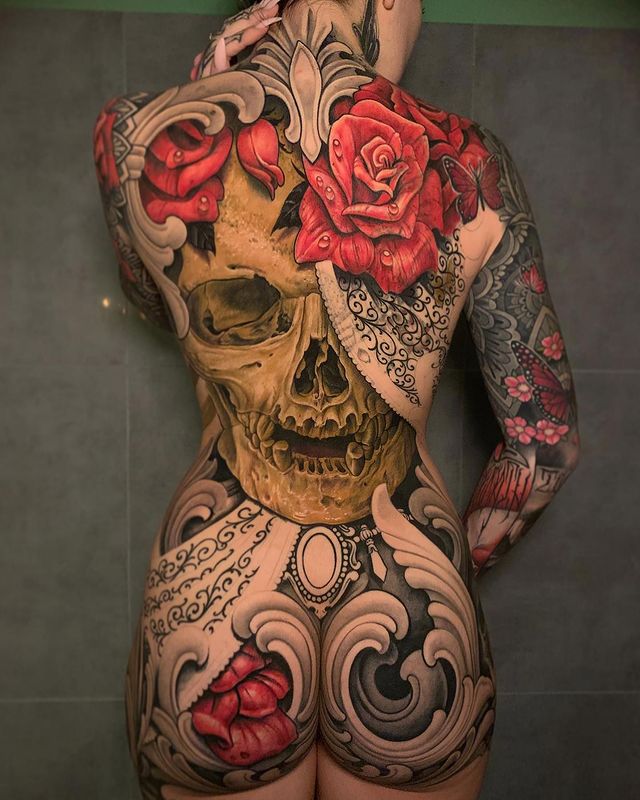
Corpsepainter
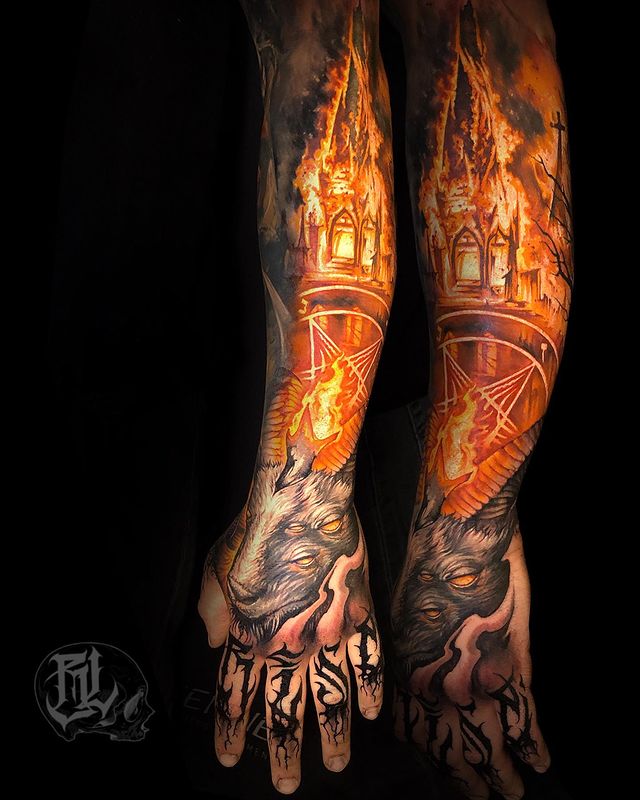
Julian Siebert is a highly skilled tattoo artist based in Munich, Germany, renowned for his spectacular neotraditional tattoo styles. As the owner of Corpsepainter Tattoo, he's professionally sponsored by several top-tier brands such as Intenze, H2Ocean, and Cheyenne. With an impressive audience of over 360,000 followers on Instagram, Julian has established himself as a prominent figure in the global tattooing community.
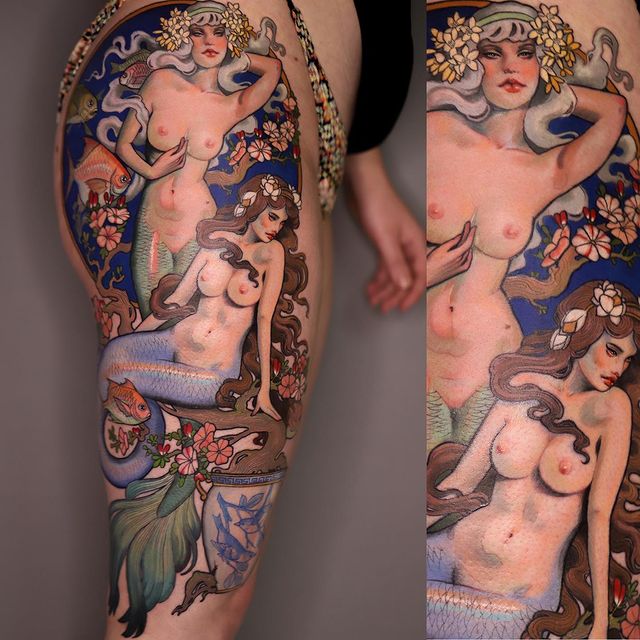
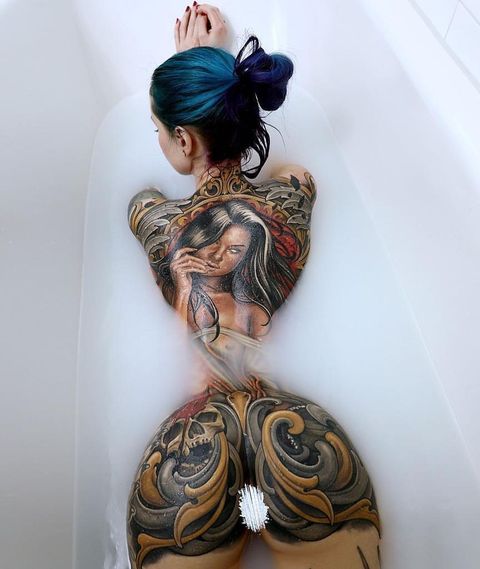
Julian Siebert is a neotraditional tattoo artist based in Munich, Germany, recognized for bold, vibrant designs with clean linework and illustrative depth. With over 365,000 followers on Instagram, his work reaches a wide international audience drawn to his distinctive approach. Neotraditional tattooing builds on American traditional foundations with expanded color palettes, greater detail, and modern compositions. Siebert's portfolio reflects these core characteristics: saturated colors, strong outlines, and dimensional shading that give his pieces a painterly quality. He operates as an independent artist in Munich. For booking inquiries, pricing, and availability, contact him directly through his Instagram profile at @julian.siebert.
Neotraditional Tattooing: History & Origins
Neotraditional tattooing emerged in the late 1980s and 1990s as artists began pushing beyond the constraints of classic American traditional work. The old school style, pioneered by artists like Sailor Jerry, relied on a limited color palette, bold black outlines, and simplified designs that healed cleanly on skin. Neotraditional kept those strong foundations but opened the door to more. Artists started incorporating wider color ranges, finer detail work, and more complex compositions while maintaining the bold readability that makes traditional tattooing hold up over time. The style draws from the same visual well as American traditional. Flash sheets, classic iconography, and the bold-as-you-go approach remain central. But neotraditional artists layer in gradients, dimensional shading, and illustrative techniques borrowed from painting and printmaking. The result sits somewhere between a classic tattoo and a fine art illustration. Julian Siebert works within this lineage in Munich, a city with a growing tattoo culture that has embraced neotraditional as one of its dominant contemporary styles. His 365,000-plus Instagram followers reflect how far this style has traveled from its American roots into global tattoo culture.
Defining Characteristics of Siebert's Neotraditional Style
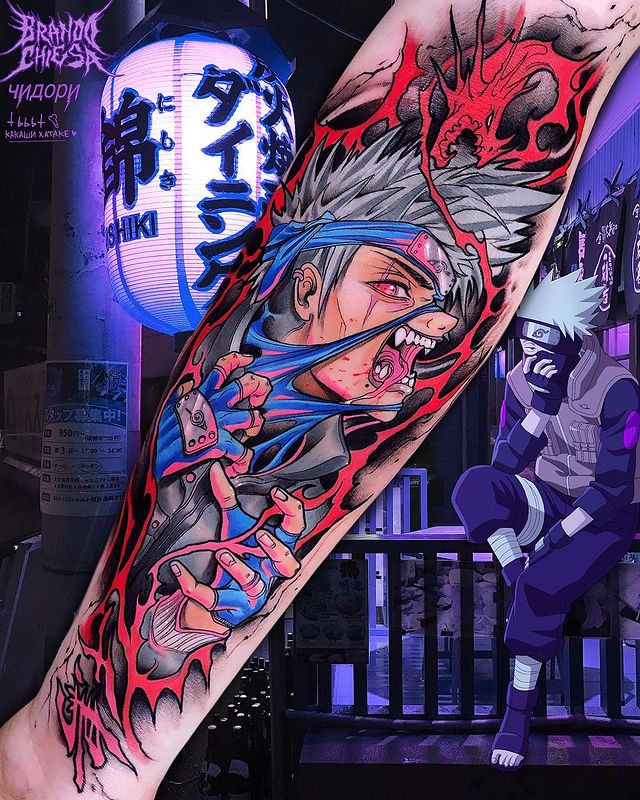
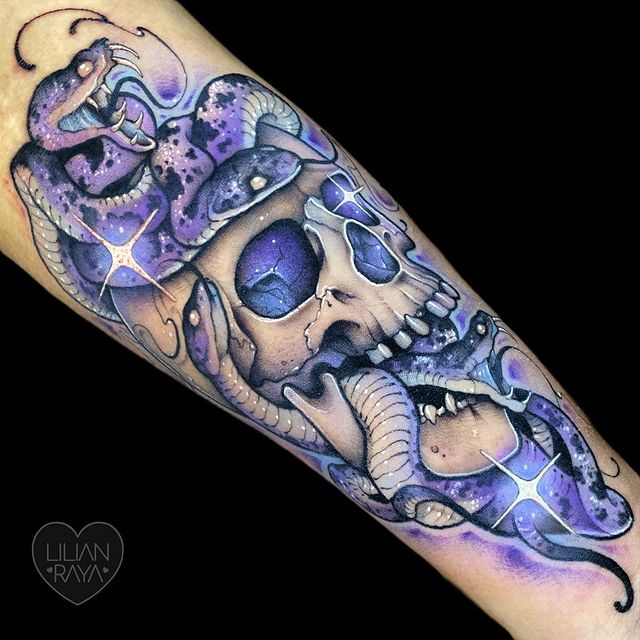
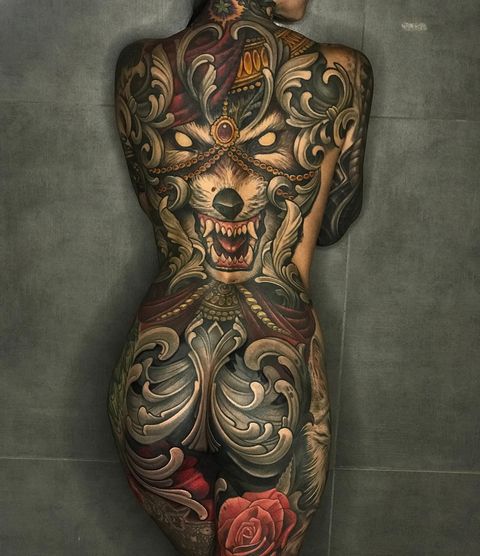
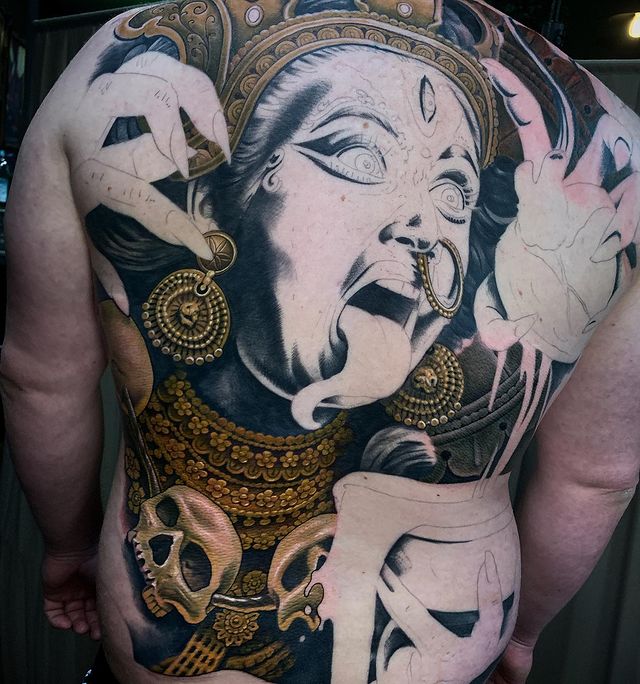
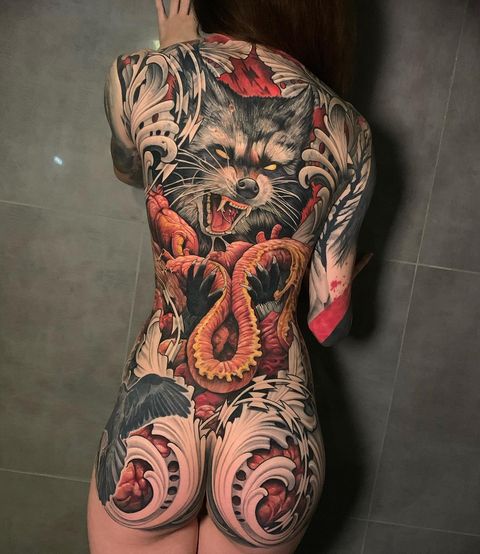
Neotraditional tattooing has a few non-negotiable traits, and Siebert's work hits all of them. First, bold black outlines. These are not optional. They hold the design together as it ages and give neotraditional pieces their signature punch. Second, saturated color. Neotraditional artists do not hold back on pigment. Expect deep reds, rich greens, and vibrant yellows that fill shapes with solid, even coverage rather than watercolor washes. Third, dimensional shading. Unlike flat traditional work, neotraditional uses gradients and layered tones to create depth. A rose is not just red. It shifts from dark crimson in the shadows to bright scarlet where light hits the petals. This shading gives pieces a painterly, almost three-dimensional quality. Fourth, illustrative detail. Neotraditional pulls from pen-and-ink illustration and vintage print aesthetics. You will see decorative line work, ornamental fills, and fine hatching that would be at home in a woodcut or engraving. Siebert's portfolio showcases these elements consistently. His pieces read clearly from a distance, reward closer inspection with detail, and carry the saturated weight that defines the style at its best.
Popular Motifs & Subjects in Neotraditional Work
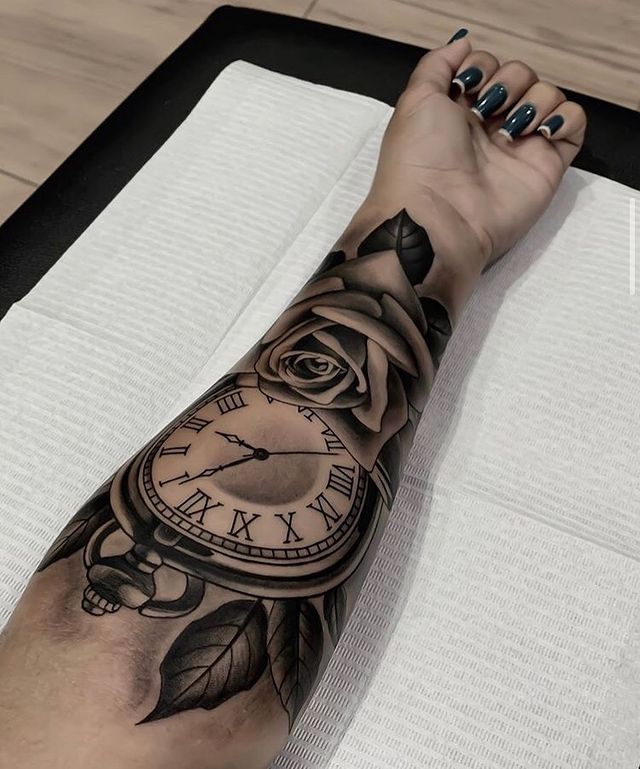
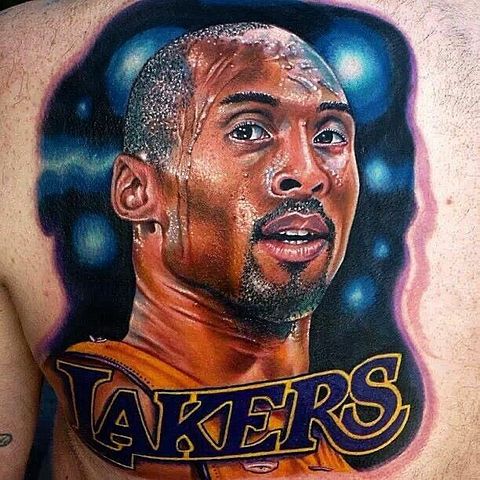
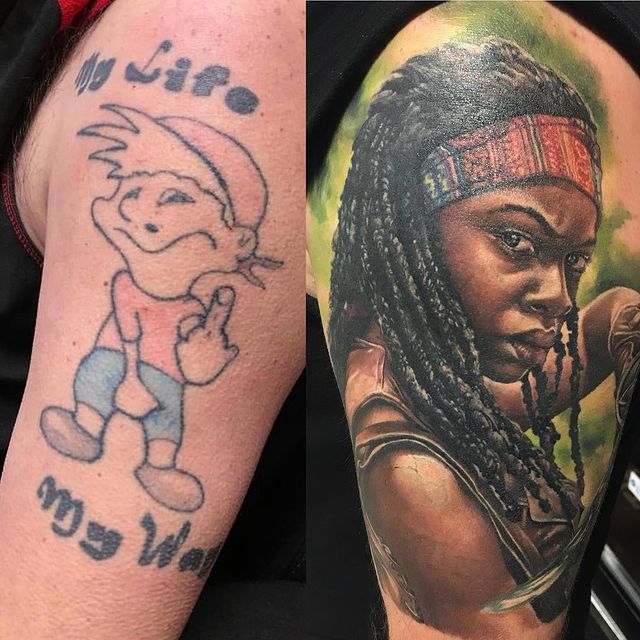
Neotraditional tattooing shares much of its visual vocabulary with American traditional. Classic subjects like roses, eagles, skulls, snakes, and daggers remain staples. But neotraditional artists render these with more detail and nuance than their traditional counterparts. A rose in neotraditional style might have layered petals with visible shading transitions, thorns with fine line detail, and leaves that show veining and depth. Beyond the classics, neotraditional has expanded into new territory. Portraiture, both human and animal, appears frequently with expressive detail. Wildlife subjects like wolves, big cats, and birds of prey get the full treatment with fur texture, feather detail, and intense eyes. Mythological figures, from Greek gods to Norse warriors, give artists room to blend ornamental design with figurative work. Floral compositions have grown more ambitious too. Full bouquets, garlands, and botanical arrangements fill sleeves and back pieces with layered color. Siebert's Instagram feed shows his command of these motifs. His animal portraits and floral pieces demonstrate the style's range, from single focal point designs to complex multi-element compositions that fill large areas with cohesive, readable imagery.
Placement & Sizing Considerations
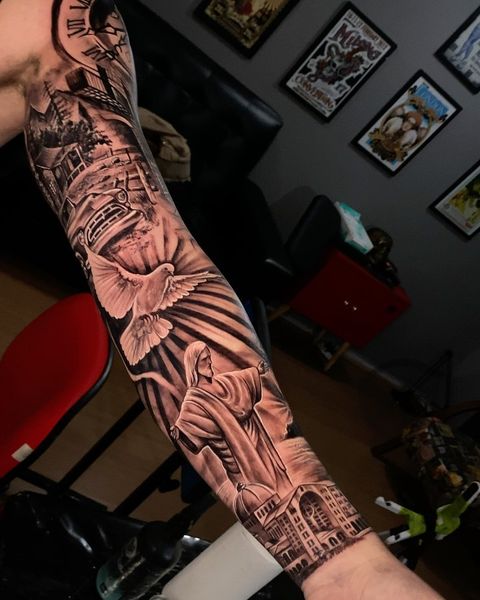
Neotraditional tattoos need room to breathe. The style relies on bold outlines, saturated color fills, and dimensional shading. All of that requires space to read clearly. Tiny placements like fingers or behind the ear do not suit neotraditional well. The detail gets lost, and the bold lines that define the style can look muddy at small scales. The sweet spots for neotraditional work are medium to large placements. Forearms, upper arms, calves, and thighs give artists enough canvas for proper shading transitions and color saturation. Sleeves are a natural fit. The style's bold readability works across the arm's contours, and the illustrative quality holds up as pieces flow around the limb. Back pieces and chest panels offer even more room for complex compositions. For smaller placements, neotraditional can work if the design is simplified. A single rose or small animal portrait on a forearm or ankle can read well if the artist adjusts the detail level to match the space available. Siebert's portfolio includes work across these placements. If you are considering a neotraditional piece, discuss sizing and placement with him directly through his Instagram to find what works for your concept.
Choosing a Neotraditional Artist
Picking the right neotraditional artist comes down to three things: portfolio consistency, style alignment, and communication. Start by scrolling through an artist's recent work, not just their highlights. Look for consistency in line weight, color saturation, and healed results. An artist who posts only fresh work might be hiding how their pieces settle over months. Siebert's large following on Instagram gives you plenty of material to study. Style alignment matters because neotraditional covers a wide range. Some artists lean more illustrative and delicate. Others push toward heavy saturation and bold graphic impact. Some specialize in specific subjects like animals or florals. Make sure the artist's natural output matches what you want, not just what they are capable of. Communication is the final piece. You need an artist who understands your concept and can translate it into their style without losing what makes the idea meaningful to you. Reach out through Instagram at @julian.siebert to discuss your idea. Be clear about placement, size, and subject matter. Good reference images help. If you are still exploring styles or want to visualize a concept before reaching out, try the AI tattoo generator to sketch out ideas first.
Explore more
Frequently Asked Questions
What style does Julian Siebert tattoo?
Julian Siebert specializes in neotraditional tattooing. This style builds on American traditional foundations with bolder color palettes, more detailed shading, and modern illustrative compositions while maintaining the strong outlines and saturated fills that make traditional work readable on skin.
Where is Julian Siebert located?
Julian Siebert is based in Munich, Bavaria, Germany. His specific studio location is not publicly listed. Contact him directly through Instagram at @julian.siebert for appointment location details.
How do I book a tattoo with Julian Siebert?
Reach out to Julian Siebert directly through his Instagram profile at @julian.siebert. Booking procedures, pricing, availability, and deposit requirements are handled through his social media. Be prepared with your concept, preferred placement, and size when you message.
How popular is Julian Siebert?
Julian Siebert has over 365,000 followers on Instagram, making him one of the more widely followed neotraditional tattoo artists in Europe. His following reflects strong international demand for his style of work.
Does Julian Siebert work at a specific tattoo studio?
His current studio affiliation is not publicly listed. He operates as an independent artist in Munich. Contact him directly through Instagram at @julian.siebert to confirm where he is currently tattooing.