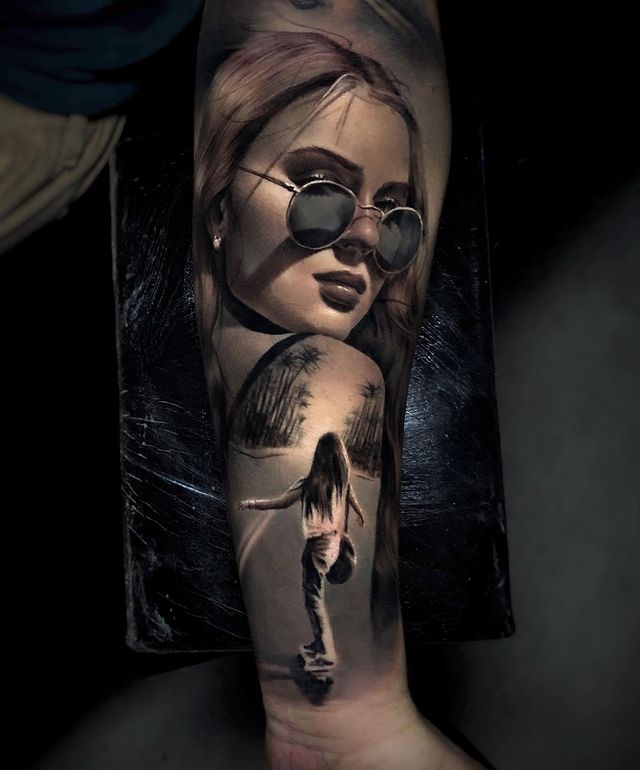
Hugo
Renowned for his distinctive work in 'black&gray, and realism' tattoo styles, Hugo Feist is a seasoned artist based out of Annecy, France. His compelling illustrations attract an audience of roughly 156,000 followers on Instagram. Known for his skilled use of industry-leading materials including @inkjecta, @fusion_ink, @h2oceanproteam, @kwadron, and @killerinktattoo, Hugo Feist stays true to his unique approach to contemporary tattoo artistry.
Hugo Feist is a black & gray realism tattoo artist based in Annecy, France. Known for highly detailed, photorealistic work rendered entirely in grayscale, Feist has built a substantial following of over 155,000 on Instagram. His specialty lies in translating photographs and real-life subjects into precise, tonal tattoo compositions that rely on shading depth rather than color. Operating out of Annecy in the Auvergne-Rhône-Alpes region, he focuses on realism pieces where contrast, smooth gradients, and fine detail define each design. For booking inquiries, contact the artist directly through his Instagram.
History & Origins
Hugo Feist emerged from the French tattoo scene in Annecy, a city better known for its alpine lake than its ink culture. That contrast shapes his work. Away from the major Parisian studios, Feist developed a black & gray realism approach that draws heavily on photographic reference and classical rendering techniques. His Instagram presence, now exceeding 155,000 followers, grew through consistent output of high-contrast, detail-heavy pieces that caught attention far beyond the Auvergne-Rhône-Alpes region. Black & gray realism itself has roots in the Chicano tattoo tradition of 1970s California, where artists used diluted black ink to create tonal depth on skin. Feist adapts that foundation to a European sensibility, favoring portraiture, wildlife, and figurative subjects over the lettering and iconography common in the American tradition. His trajectory reflects how social media has redistributed visibility. Artists no longer need a major city address to build international recognition. Feist's Annecy base proves that technical command and a clear stylistic lane can attract a global audience from anywhere.
Defining Characteristics
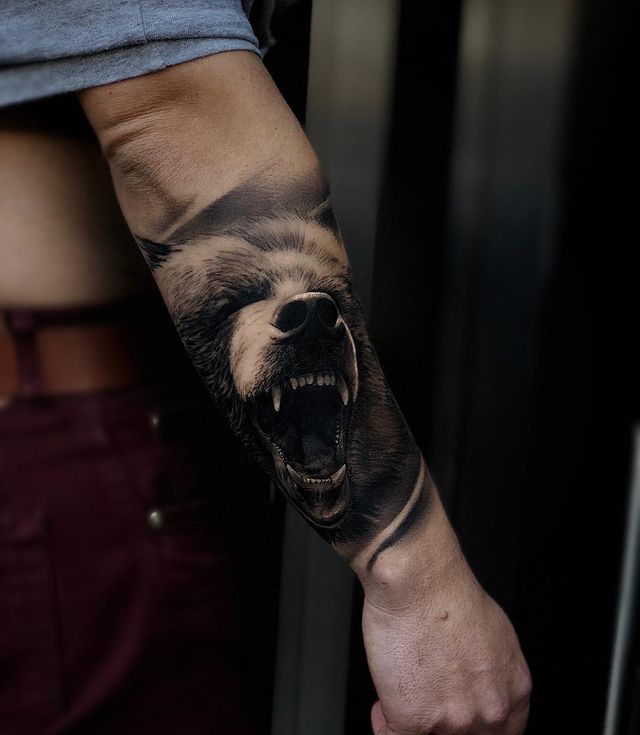
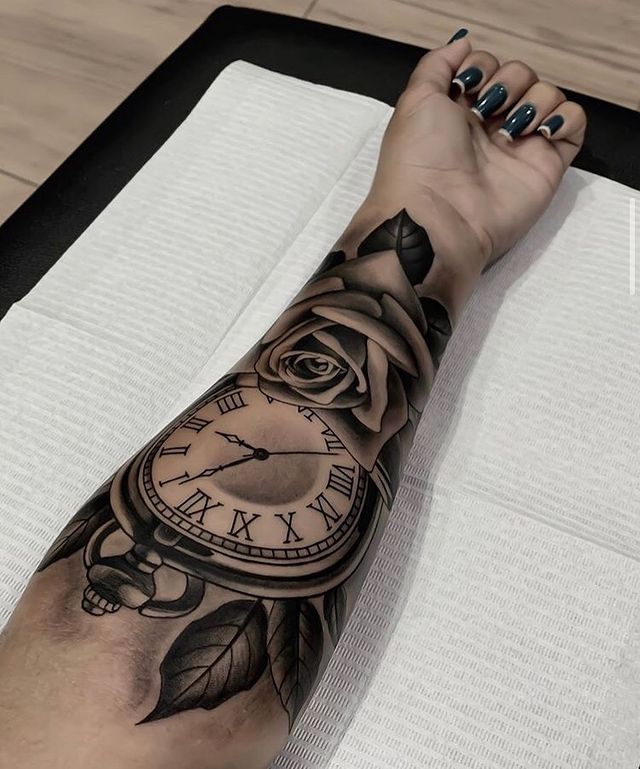
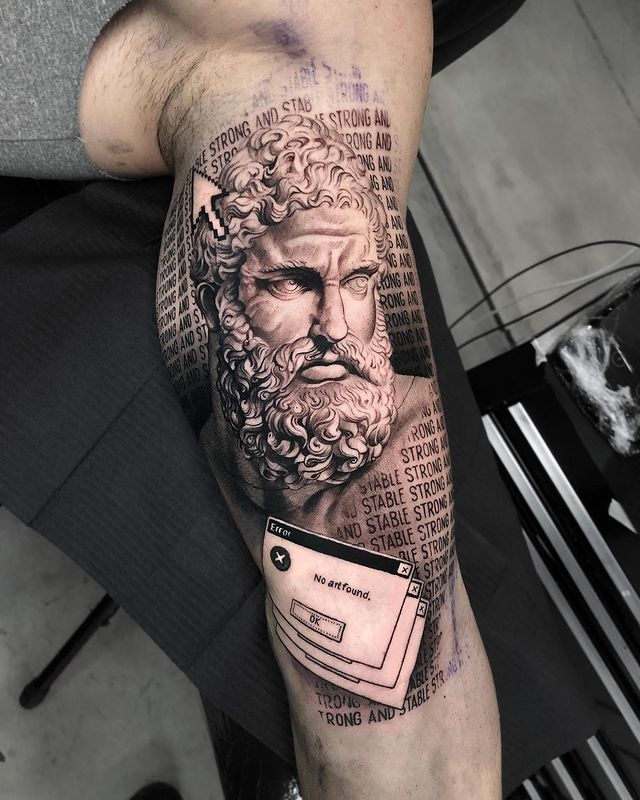
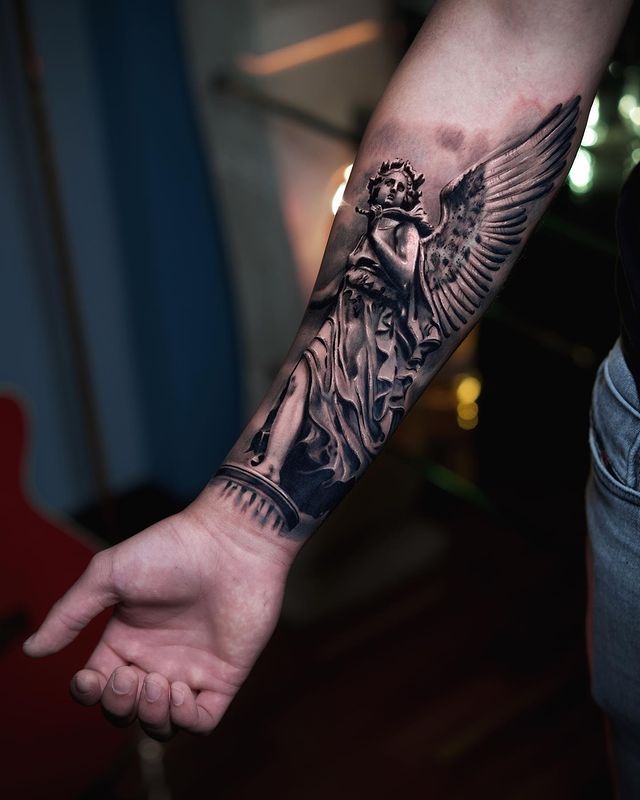
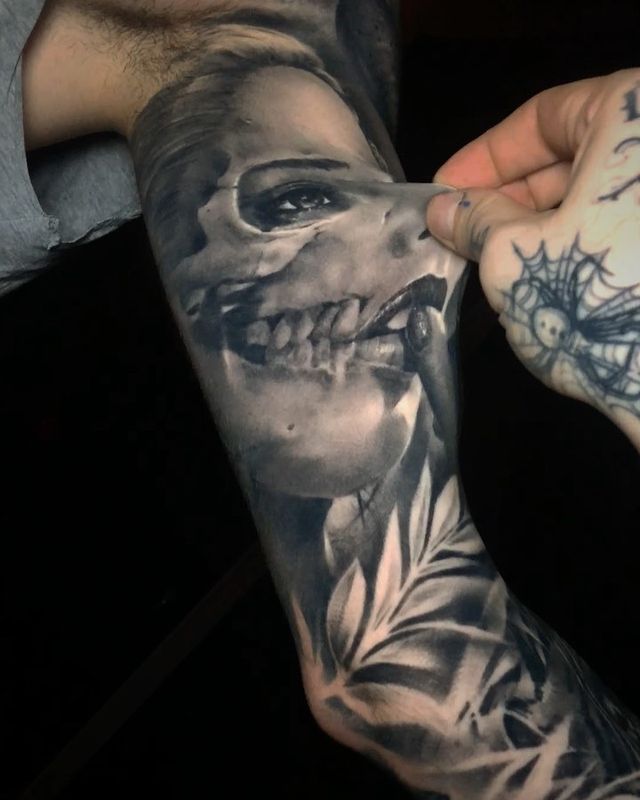
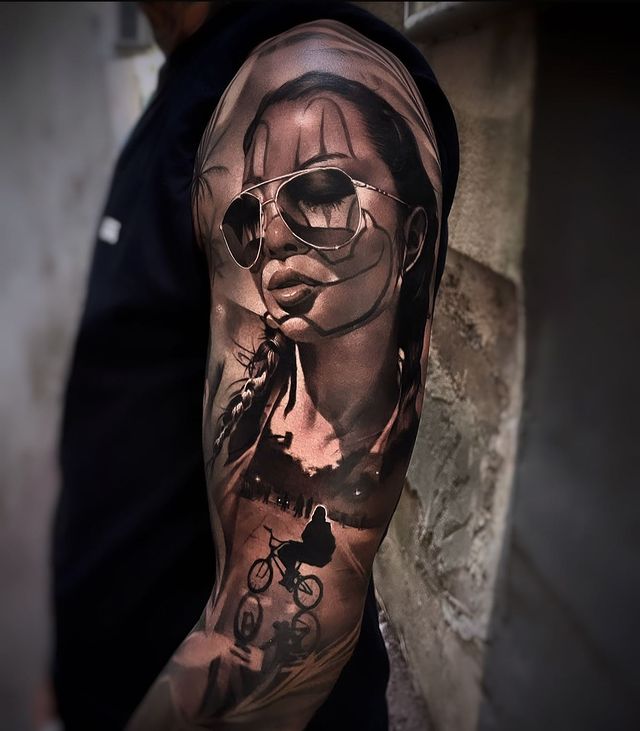
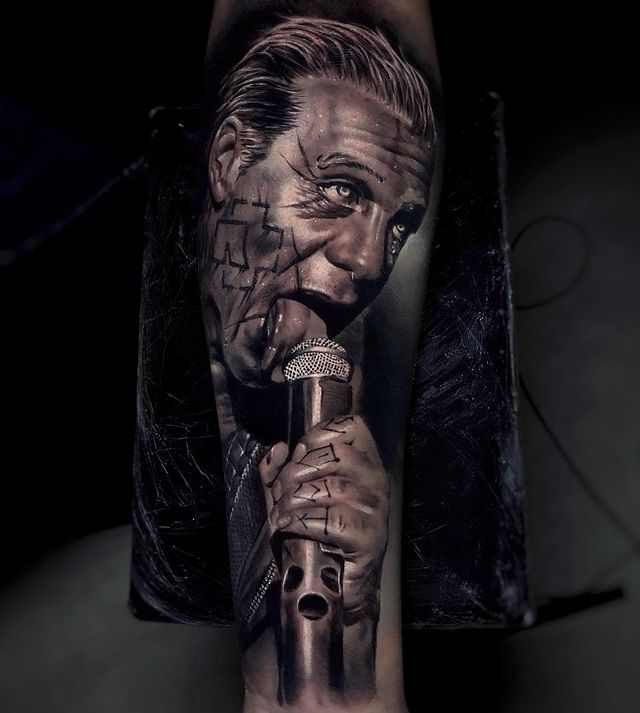
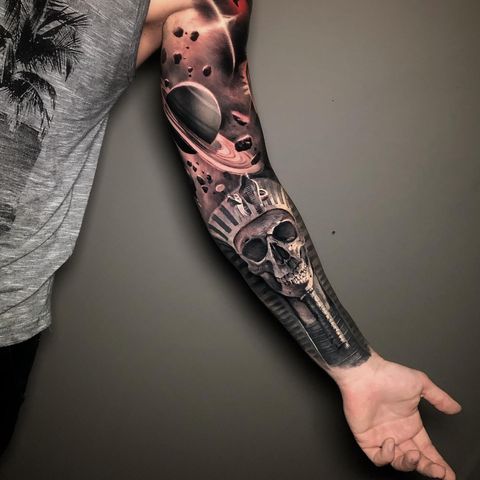
Feist's work is defined by tonal precision. He works exclusively in black & gray, which means every gradation, shadow, and highlight comes from manipulating a single ink color at different dilutions. The result is a look that reads almost like a charcoal drawing or silver gelatin photograph transferred to skin. Smooth transitions between light and dark areas distinguish strong realism from flat, muddy work. Feist handles these gradients with control, avoiding the harsh banding that marks less experienced artists. His contrast choices tend toward the dramatic. Deep blacks anchor key areas, while mid-tones and highlights give the pieces dimensionality. This approach demands disciplined needle work. Realism at this level requires consistent saturation, careful layering, and an understanding of how ink settles in the dermis over weeks of healing. Feist's portfolio shows healed results that maintain clarity, which is a practical indicator of technical execution. The absence of color is a deliberate constraint. It forces the viewer to focus on form, texture, and light rather than chromatic appeal.
Popular Motifs & Subjects
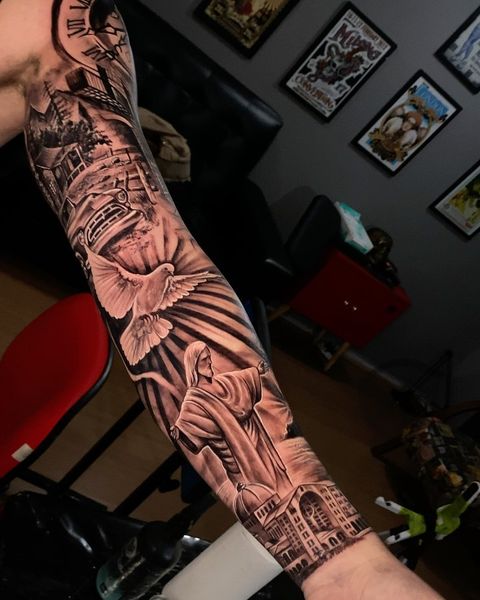
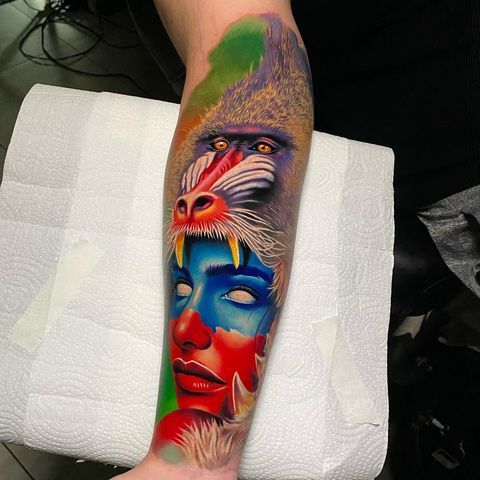
Portraiture dominates Feist's portfolio. Human faces, whether from photographic reference or live sitting, require exacting proportion and shading to read correctly on skin. A millimeter of misplacement in an eye or lip line can make a portrait look distorted. Feist's follower count and engagement suggest he handles this challenge consistently. Animal subjects also appear frequently. Wildlife realism, particularly big cats, wolves, and birds of prey, plays to the same strengths. Fur texture, eye reflection, and anatomical accuracy all demand the same tonal control as human portraiture. Some pieces incorporate figurative or conceptual compositions, blending realistic elements with atmospheric backgrounds. These works often use smoke, mist, or abstract shadow fields to create depth behind the central subject. Religious and classical art references surface in his work as well, connecting to the broader European tattoo tradition where iconography from painting and sculpture gets reinterpreted on the body. Each motif choice serves the realism framework. Subjects that rely on texture, light, and shadow translate well into black & gray. Flat or purely graphic designs do not appear in his output.
Placement & Sizing
Realism tattoos need space. The level of detail in Feist's work requires enough skin area to render fine lines, smooth gradients, and tonal transitions without compression. A photorealistic portrait compressed onto a forearm will lose definition and age poorly compared to the same design placed across a shoulder blade or thigh. Feist's larger pieces, visible across his Instagram, typically occupy full limbs, back panels, or chest placements. These areas provide the canvas width necessary for his contrast-heavy compositions to breathe. Smaller black & gray realism pieces can work, but they require simplified reference and reduced detail density. The inner arm, ribs, and thigh offer good surface area for medium-scale work. Hands, feet, and neck present challenges for realism due to limited space and faster ink spread. Clients considering Feist's style should plan for multi-session projects. Large-scale realism involves layering, with each session building depth and contrast. Rushing the process into a single sitting often sacrifices the tonal range that makes the style effective. Discuss placement and sizing expectations directly with the artist before committing to a design.
Choosing an Artist for Black & Gray Realism
Selecting a realism artist requires looking beyond portfolio highlights. Any tattooer can post their best three pieces. What matters is consistency across healed work, range of subject matter, and how well the artist handles the specific motif you want. Start by reviewing healed photos, not just fresh ink. Black & gray realism shifts as it heals. Smooth gradients can settle unevenly, and contrast can flatten if the artist's saturation technique is off. Feist's Instagram includes healed results, which is a positive signal. Check whether the artist's style matches your reference. Realism spans a spectrum from hyper-photographic to painterly. Some artists lean sharp and crisp. Others use softer edges and atmospheric depth. Feist's work tends toward high contrast with dramatic lighting, so bring reference that aligns with that aesthetic. Communication matters as much as technical skill. Realism projects often require consultation, reference exchange, and placement planning. An artist who responds clearly and sets realistic expectations saves both parties frustration. For Feist, reach out through his Instagram to discuss your concept, timeline, and budget before sending a deposit or booking travel.
Explore more
Frequently Asked Questions
What style of tattoos does Hugo Feist specialize in?
Hugo Feist specializes in black & gray realism. His work focuses on photorealistic designs rendered in grayscale, using detailed shading and contrast rather than color.
Where is Hugo Feist based?
Hugo Feist is based in Annecy, in the Auvergne-Rhône-Alpes region of France.
How do I book a tattoo with Hugo Feist?
Contact Hugo Feist directly through his Instagram profile at @hugofeist to inquire about booking, pricing, and availability.
How much does Hugo Feist charge for a tattoo?
Pricing details are not publicly listed. Contact the artist directly through Instagram to discuss rates and project scope.
Does Hugo Feist take walk-in appointments?
Walk-in availability is not confirmed. Reach out to Hugo Feist via his Instagram to ask about scheduling and appointment policies.