

Horimitsu tebori
Horimitsu is a highly skilled tattoo artist based in Tokyo, Japan. He specializes in illustrative, Japanese, and traditional styles, and has managed to garner a strong following of nearly 90,000 on Instagram. Horimitsu exudes attributes of immense professionalism, priding himself on maintaining a clean workspace, whilst delicately crafting each piece with precision and artistry. He is not just a tattoo artist, but a commendable representation of Japanese art and tradition.
Horimitsu tebori is a tattoo artist based in Tokyo, Japan, specializing in Japanese traditional, illustrative, and traditional tattooing. The name references tebori, the centuries-old hand-poked tattooing technique central to Japanese Irezumi. With over 87,000 Instagram followers, Horimitsu has built a strong reputation among collectors seeking authentic Japanese tattoo work. Their practice sits at the intersection of cultural tradition and illustrative storytelling, producing pieces that honor the visual language of Japanese tattooing. For booking inquiries, contact the artist directly through their Instagram profile at @horimitsu.
History & Origins
The name Horimitsu carries real weight in Japanese tattoo culture. The "hori" prefix is a traditional honorific for tattoo artists, derived from the Japanese word meaning "to carve" or "to engrave." Tebori, the technique referenced in this artist's name, is the hand-poked method of tattooing that predates modern machines by centuries. This method uses a bamboo or metal rod with needles attached at the tip, driven by hand into the skin. Horimitsu operates out of Tokyo, a city with deep roots in Japanese tattoo history. While specific details about their training lineage remain private, their work clearly draws from the Irezumi tradition, which dates back to the Edo period (1603-1868). The tradition they practice is not just a style. It is a cultural discipline that requires years of dedication and respect for the craft's history. Japanese tattooing has survived periods of criminalization and stigma to become recognized as a serious art form worldwide.
Defining Characteristics
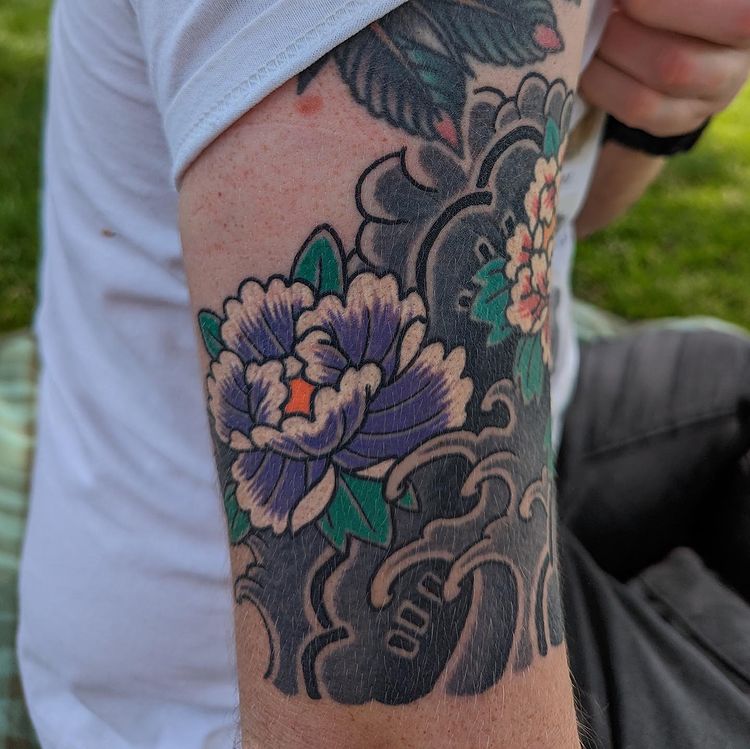
Horimitsu's work sits at the intersection of three specialties: Japanese traditional, illustrative, and traditional tattooing. What sets their portfolio apart is the commitment to tebori technique. Hand-poked tattoos have a distinct visual quality. The ink settles differently in the skin compared to machine work, creating softer gradients and a warmth that many collectors describe as more organic. The illustrative tag in their specialties suggests they bring a narrative quality to their pieces. Japanese traditional tattooing is inherently storytelling. Every koi, dragon, or peony carries symbolic weight. Horimitsu's approach appears to honor these stories while maintaining the bold readability that traditional Japanese work demands. Their 87,000+ Instagram followers reflect a strong reputation among collectors who value authenticity in Japanese tattooing. The combination of hand technique and illustrative sensibility produces work that feels both historically grounded and personally expressive.
Popular Motifs & Subjects
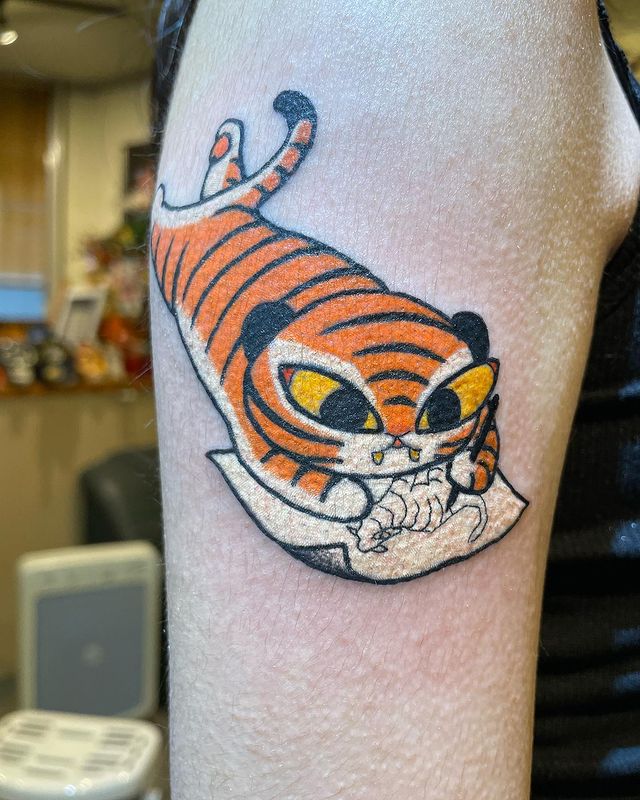
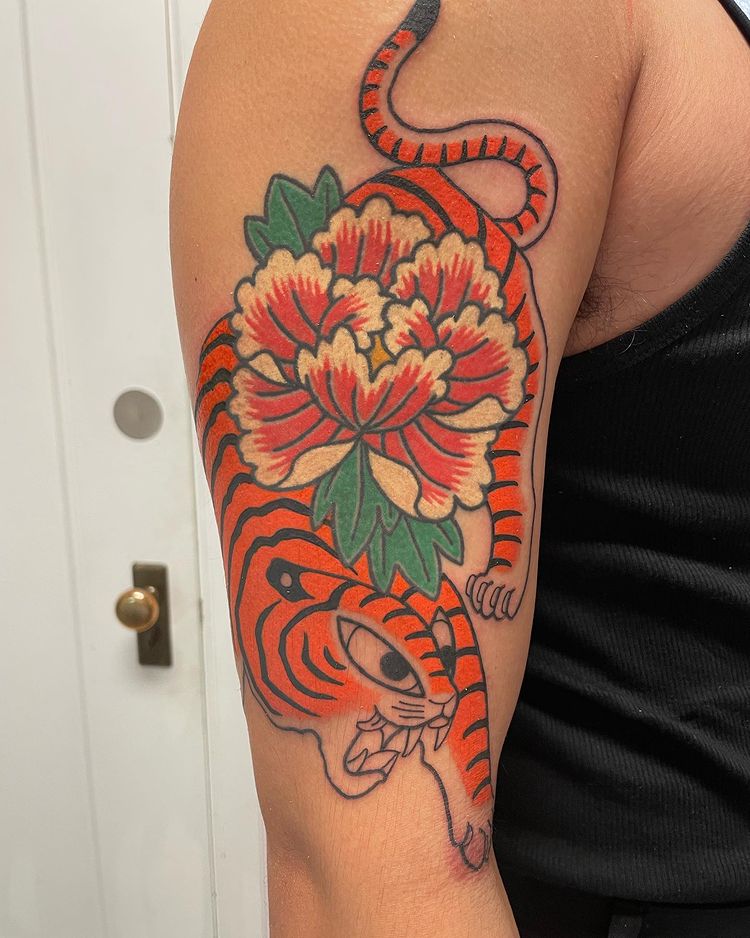
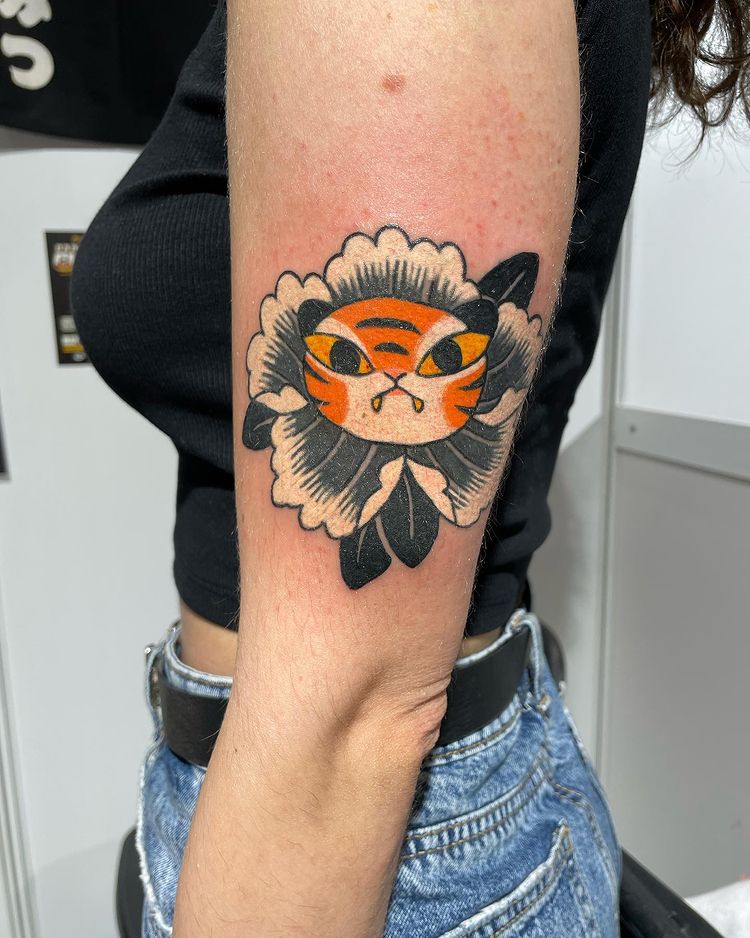
Japanese traditional tattooing runs on a visual language built over centuries. Common motifs in Horimitsu's specialty include koi fish, which represent perseverance and strength. Dragons symbolize wisdom and protection. Cherry blossoms capture the fleeting nature of life. Tigers stand for courage. Fudo Myoo, the fierce protector deity, appears frequently in traditional work. Peonies symbolize wealth and good fortune, while snakes represent rebirth and protection. The illustrative approach means these motifs are not copied from flash charts. They are interpreted and composed to flow with the body's natural contours. A full back piece might tell the story of a koi climbing a waterfall to become a dragon. A half sleeve could focus on a single powerful image with supporting elements. Each motif carries layers of meaning that go beyond aesthetics, connecting the wearer to Japanese cultural narratives that have been told through skin for generations.
Placement & Sizing
Traditional Japanese tattooing has specific conventions around placement. Full body suits, called "donburi," cover the torso and limbs with interconnected designs. More commonly today, collectors choose smaller formats like full back pieces, half sleeves, or thigh pieces. Tebori work often favors larger placements because the hand-poking technique creates a different rhythm than machine work. Large areas allow the artist to build up tonal gradients and detail that showcase the technique's strengths. That said, Horimitsu's illustrative specialty suggests they may work across various scales. A small, carefully placed piece can carry as much impact as a full sleeve when the composition is strong. Placement in Japanese tattooing also follows traditional rules about what imagery goes where on the body. Modern artists often adapt these conventions, but the underlying principle remains: the design should work with the body's movement and structure, not fight against it.
Choosing an Artist & Booking
Booking with Horimitsu requires direct contact. Their Instagram profile at @horimitsu is the best starting point for inquiries. Many traditional Japanese artists, especially those practicing tebori, manage their own bookings rather than using online platforms. When reaching out, be prepared with a clear idea of what you want. Japanese traditional artists often prefer clients who understand the cultural significance of the imagery they are requesting. Respect for the craft goes a long way. Pricing, wait times, and consultation processes vary and should be discussed directly with the artist. If you are traveling to Tokyo specifically for this artist, plan well in advance. Traditional Japanese tattooing, especially tebori, often requires multiple sessions for larger pieces. Browse our tattoo artists directory for more Japanese tattoo specialists, or try the AI tattoo generator to explore Japanese-style design concepts before your consultation.
Explore more
Frequently Asked Questions
How do I book an appointment with Horimitsu tebori?
The best way to reach Horimitsu is through their Instagram profile at @horimitsu. Many traditional Japanese artists manage their own bookings directly rather than through online platforms. Send a direct message with your inquiry and be prepared to discuss your design ideas.
What is tebori tattooing?
Tebori is the traditional Japanese hand-poked tattooing technique that predates modern tattoo machines by centuries. The artist uses a bamboo or metal rod with needles attached at the tip, inserting ink into the skin by hand. This method produces a distinct visual quality with softer gradients and a warmth that many collectors consider more organic than machine work.
What styles does Horimitsu specialize in?
Horimitsu specializes in three areas: Japanese traditional (Irezumi), illustrative tattooing, and traditional tattooing. Their work draws from the visual language of Japanese tattooing, incorporating motifs like koi, dragons, and peonies while bringing an illustrative, narrative quality to each piece.
How much does a tattoo from Horimitsu cost?
Pricing information is not publicly listed. Contact the artist directly through Instagram to discuss pricing, session minimums, and project scope. Traditional Japanese tattooing, especially tebori work, often requires multiple sessions, which affects total cost.
Does Horimitsu accept walk-ins?
Contact the artist directly to confirm whether walk-ins are accepted. Most traditional Japanese tattoo artists, particularly those practicing tebori, work by appointment only due to the time-intensive nature of the technique and the demand for their work.